How a Missing Kick-Out Flashing Causes Wall Leaks
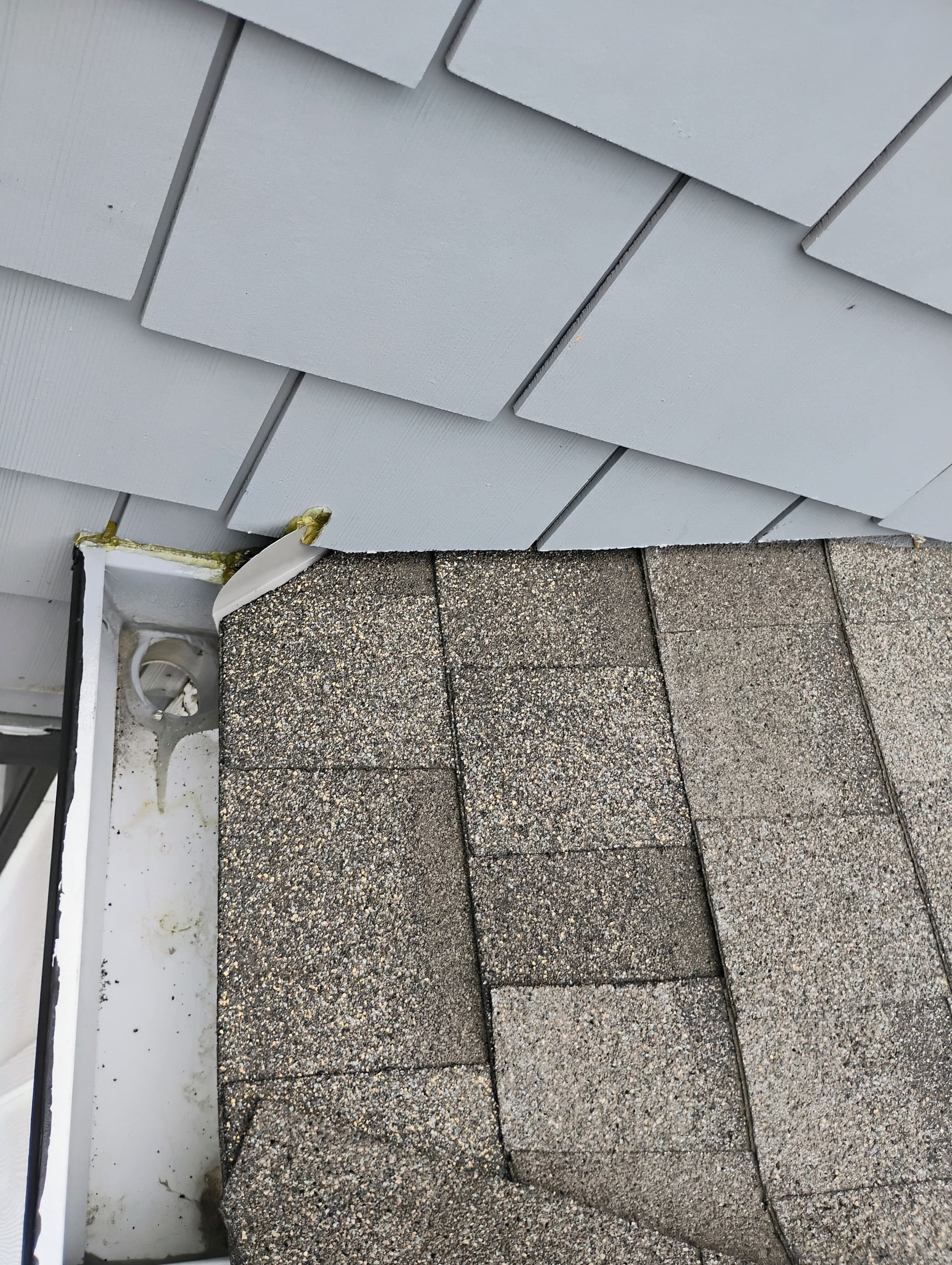
A lot of roof-related wall leaks aren't actually coming from the roof itself. They start at the transition point where the roof slope meets the siding - and without the right flashing in place, water just runs straight down behind the exterior cladding instead of into the gutter where it belongs.
That's exactly the situation kick-out flashing is designed to solve. It's a small metal piece that redirects runoff away from the siding and into the gutter channel. Without it, you're basically setting up a slow drip system that works against your wall assembly every time it rains. The damage builds up quietly - rotting sheathing, stained siding, and eventually interior leaks that seem to come out of nowhere.
When we get called out for a wall leak, this is one of the first things we check. It's a common miss on older installs and even some newer construction. Getting it right means the flashing needs to be properly integrated with both the asphalt shingles and the gutter system - not just slapped on top with a bead of caulk.
If you've noticed staining along your siding near the roofline, or you've had interior dampness that nobody has been able to trace, the kick-out flashing connection is a strong place to start. It's a relatively straightforward fix when caught early - but the longer water is allowed to work its way in, the more involved the repair gets.