Why Flat Roof Leaks Are Rarely Where You Think They Are
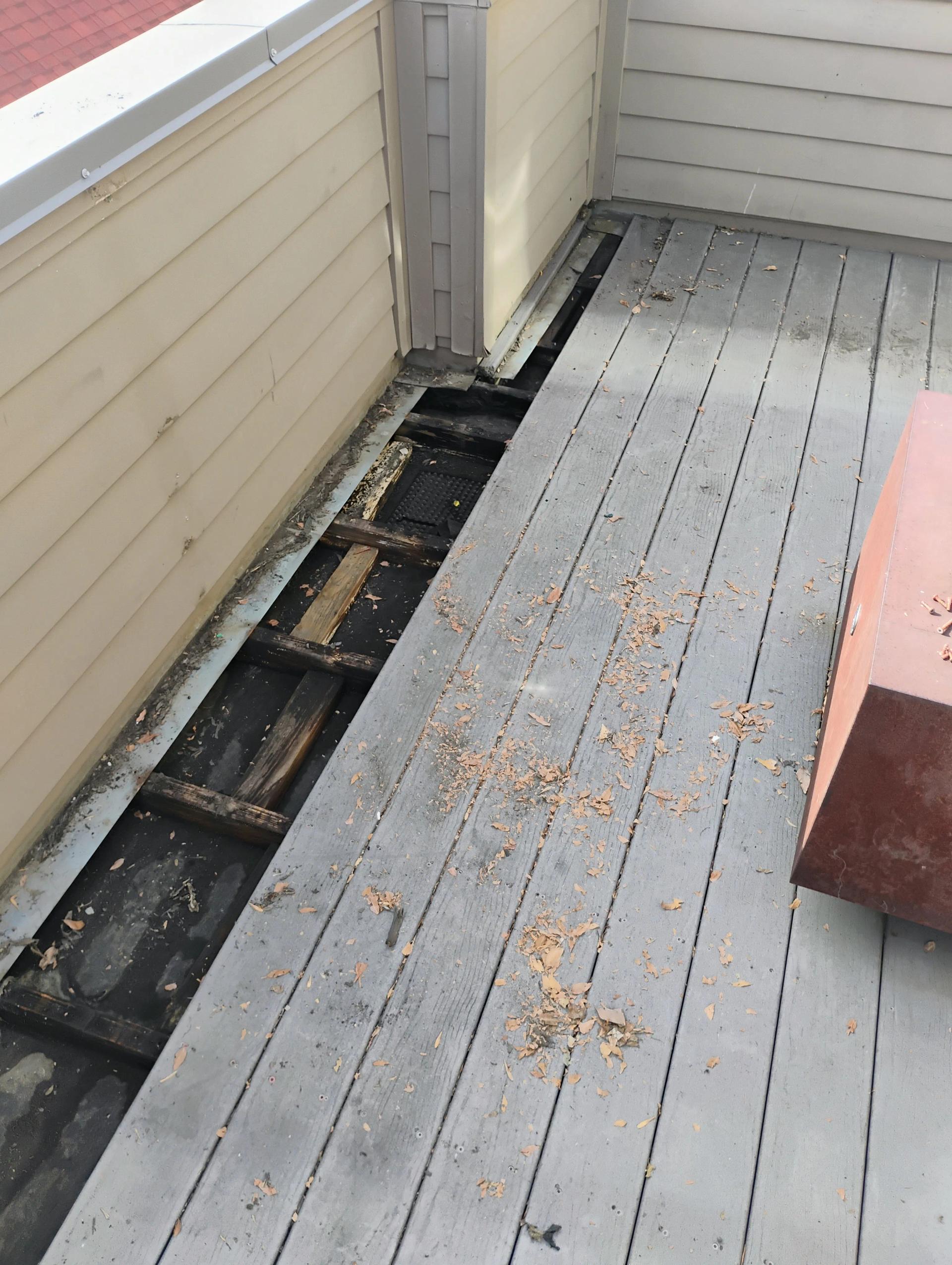
Flat roof leaks are sneaky. Water gets in at one spot, travels along the decking or underlayment, and shows up somewhere completely different. That's why the number one mistake homeowners make is trying to patch the spot where they see the damage - because that's almost never where the actual problem started.
When we get called out for a flat roof leak, we don't just look at the obvious. We trace it back. We're checking the membrane, the flashing along the walls, the perimeter edge, anywhere water could be finding its way in. The area where the flat roof meets the siding and wall base is one of the most common culprits, and it's easy to miss if you don't know what you're looking for.
What we often find is that by the time a leak becomes noticeable inside, the damage underneath has already been spreading for a while. Rotted decking, saturated underlayment, compromised framing - none of that shows up on the surface until it's already a bigger deal than it needed to be. That's exactly why early diagnosis matters so much.
We take a thorough, methodical approach to every flat roof inspection. No guessing, no quick patches slapped over the wrong area. We dig into the problem, find the real source, and give you a clear picture of what's going on and what it's going to take to fix it right. Small issues are always easier and cheaper to deal with than ones that have had time to grow.
If something feels off - a stain on the ceiling, a soft spot on the decking, moisture where it shouldn't be - don't sit on it. Flat roofs don't heal themselves, and fall weather heading into winter is not the time to let a small leak turn into a structural headache.